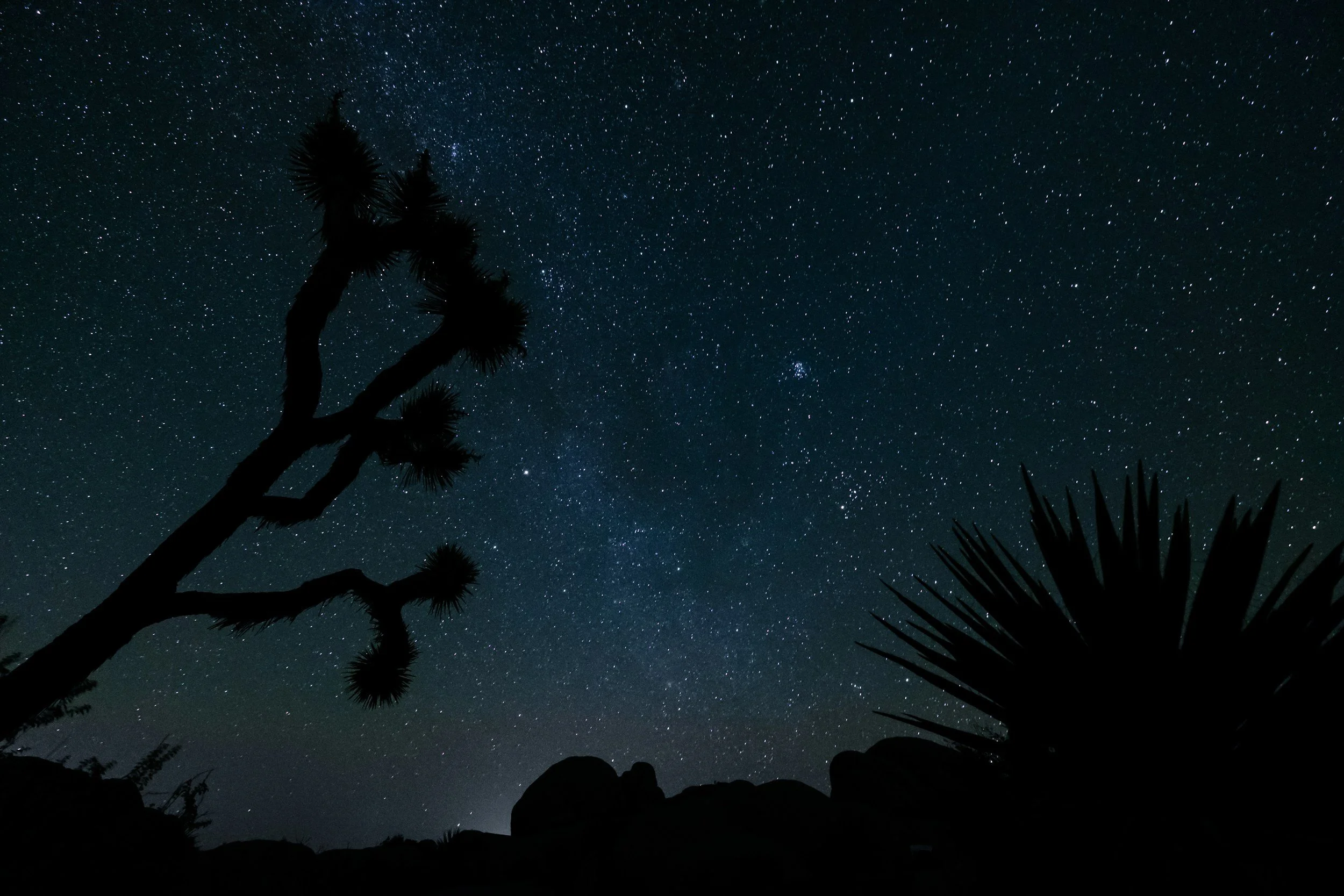
Desert After Dark
With wide open horizons and very little light pollution, the high desert delivers some of the clearest night skies in Southern California. No tickets, no crowds. Just you, the desert, and whatever’s happening overhead.
Here’s a guide to some noteworthy celestial events in 2026.
Total Lunar Eclipse (Blood Moon)
March 3
The moon slips into Earth’s shadow and turns a deep, rusty red. It’s slow. It’s quiet. And it’s one of those rare moments where doing absolutely nothing feels productive. No equipment needed, just look up.
Lyrid Meteor Shower
Late April | Peak: Apr 22 - 23
An old-school meteor shower with a reputation for surprise fireballs. Spring nights in the desert are prime for long watches - not too cold, not too hot, just right for lying back and letting the sky do its thing.
Eta Aquarid Meteor Shower
Early May | Peak: May 5 - 6 | Best before dawn
Leftovers from Halley’s Comet, moving fast and low across the sky. You’ll want an early alarm and a clear eastern view. Worth it - especially when the desert is still quiet.
Geminid Meteor Shower
Mid-December | Peak: Dec 13 - 14
Reliable. Bright. And early enough in the night that you don’t have to suffer through an all-nighter. Cold air, clear skies, and some of the best meteor viewing of the year.
Planet Sightings
All Year Long
Jupiter, Saturn, Mars, Venus - they all take turns showing off. You don’t need a telescope to appreciate how bright and unreal they look above the desert. Binoculars help, but naked-eye works just fine.
Remember:
New moon = better everything
Give your eyes time to adjust (put the phone away)
Nights get cold, fast
Patience pays off